
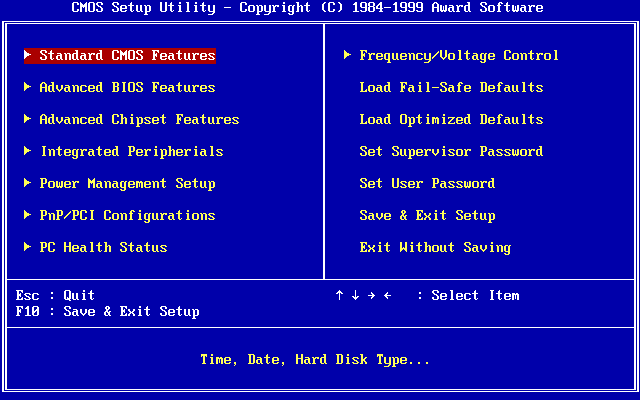
An Operating System is basically a layer of software you use on your hardware so that your PC which was previously just a big brick becomes a slightly more functional brick.(joke) It is the software to the hardware, doorknob to the door so to speak. It allows you to actually use your PC without much thought. Without an Operating System, the only thing you will be able to access on your PC is your BIOS. No, that isn't a plant-based fuel. So, an Operating System turn out to be pretty nifty after all, right?
There are three major desktop OSes that are being used today. That being Windows, Macintosh, and the Linux which is usually the vocal minority. of the three. They make that less than 1 percent market-share seem like 15 percent market-share. At least. You can find the explanation of each Operating System in their Wikipedia articles, which I have conveniently placed for you here: Windows, MacOS, and Linux
I could read those Wikipedia articles and watch a few YouTube videos on the matter and then paraphrase everything I understood. But I'm not going to do that. I'll summarize whatever knowledge I have in the table below, succinctly(but with no guarantee over accuracy). Feel free to let me know of any errors down in the comments. In regards to the comments, I have enabled Anonymous commenting, so you won't have to go through the hassle of creating an account in order to comment.
On another note though, the entire article was written in HTML5 using Notepad++ instead of Blogger's editor. This was some kind of pseudo-exercise for me, to see whether I could actually recall and use whatever I had been learning from Codecademy. Also, the table that I spoke of!
| All Operating Systems | |||
|---|---|---|---|
| Description | Windows | Mac OS | Linux |
| Based on | MS-DOS | UNIX | UNIX |
| Year of Origin | 1983 | 1984 | 1991 |
| Versions |
Windows XP, Windows Vista, Windows 7, Windows 8, Windows 10 |
Lion, Mountain Lion, Mavericks, Yosemite, El Capitan |
Multiple: Ubuntu, Linux Mint, Fedora, Debian, openSUSE |
| Developer | Microsoft | Apple | Multiple: Canonical, Linux Mint Team, Red Hat, Debian Project, OpenSUSE Project |
| Known for | Ease of use. Users grow up on Windows as their primary OS. Viruses. Viruses target Windows with 94% of market share. Bloatware. 99% of PC Manufacturers install Windows on their respective PCs for sale. |
Premium Feel. No matter what you say, Products made by Apple will always be, in Public perception of course; better than anything else. The sheer price of an Apple product solidifies this view. Digital Producer Haven. If you are a digital producer, be it audio or video; Apple probably has more professional products geared towards you. |
Wrong public perception. Everyone who has never used Linux tends to think it is difficult to use. They are only 50 percent right, though. For an everyday user, popular distributions such as Linux Mint and Ubuntu will perform accordingly. Things only start to go technical once you aim to troubleshoot your PC. Weak market share. With under 1 percent market share, Linux fails to win Desktop users' hearts. They perform much better in other segments though, such as supercomputers and servers. |

No comments:
Post a Comment